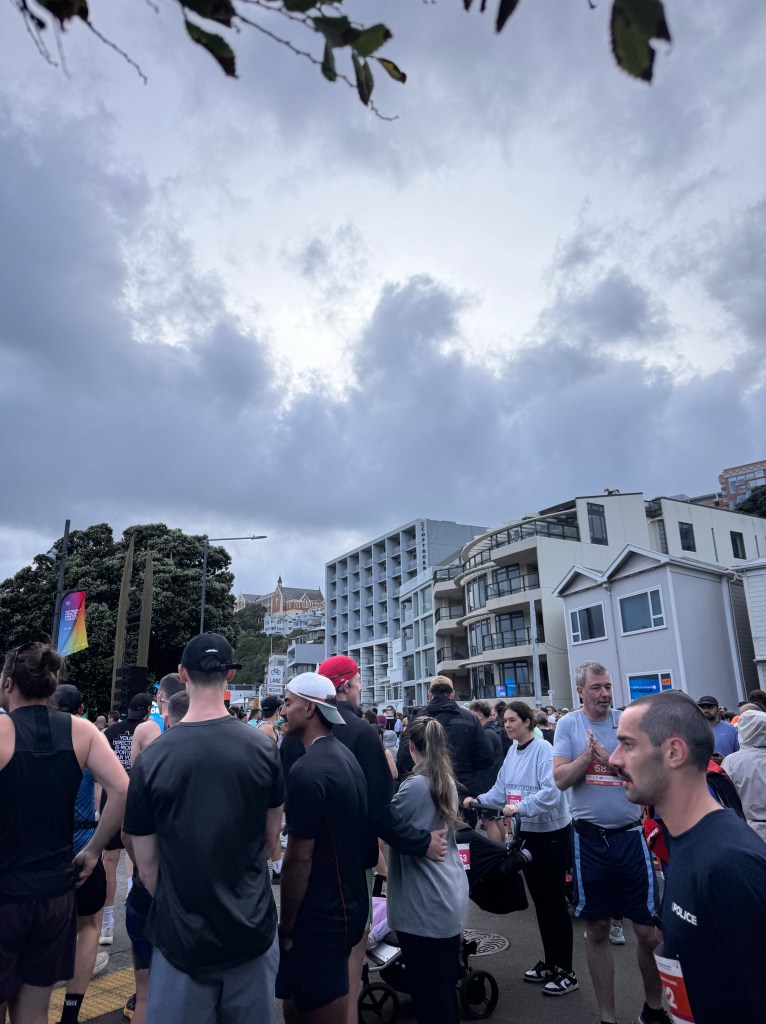
I didn’t finish the race.
If you have ever run in Wellington, or even just visited the city, you’ll know exactly what I am about to describe. A howling southerly. It hits you sideways, then head‑on, then somehow from below. Cold. Relentless. Just another day in the windy city.
Not ideal conditions to run a race.
On the 15th of February, I raced the Round the Bays Half Marathon. On a good day, it’s close to perfect. Flat, scenic, easy to settle into. On a bad day, you spend kilometres running straight into 80km southerlies with nowhere to hide.
Despite the conditions, I went out strong. I settled into a pace around 4:30 to 4:20 per kilometre, and for a while, it genuinely felt possible. Even on a day like that, I thought I was on track for a personal best.
I had impulsively signed up eight weeks out and devoted most of the summer to getting myself into peak shape for the race. I was hitting times and paces in training that I could have only dreamed of before. I genuinely believed I was going to hit my goal of a sub‑1:40 half marathon.
Oh No
Around six kilometres in, something shifted.
It wasn’t a niggle. It wasn’t tightness. It was a sharp, unfamiliar pain in my calf. The kind that cuts straight through all the mental bargaining you usually do while running.
It hurt. A lot.
I adjusted, slowed slightly, tried to change my stride. But I still believed the PB was possible.
I wasn’t ready to let go of the goal. Not yet. I told myself it was just pain, something to work through. That stopping now would mean I hadn’t pushed hard enough. That perseverance meant continuing, even when something felt wrong.
That logic felt familiar. Comfortable, even. The idea that quitting is worse than hurting. That progress only counts if you finish. I kept repeating it to myself, kilometre after kilometre, with Charli XCX blasting in my headphones as if volume alone might drown out what my body was trying to say.
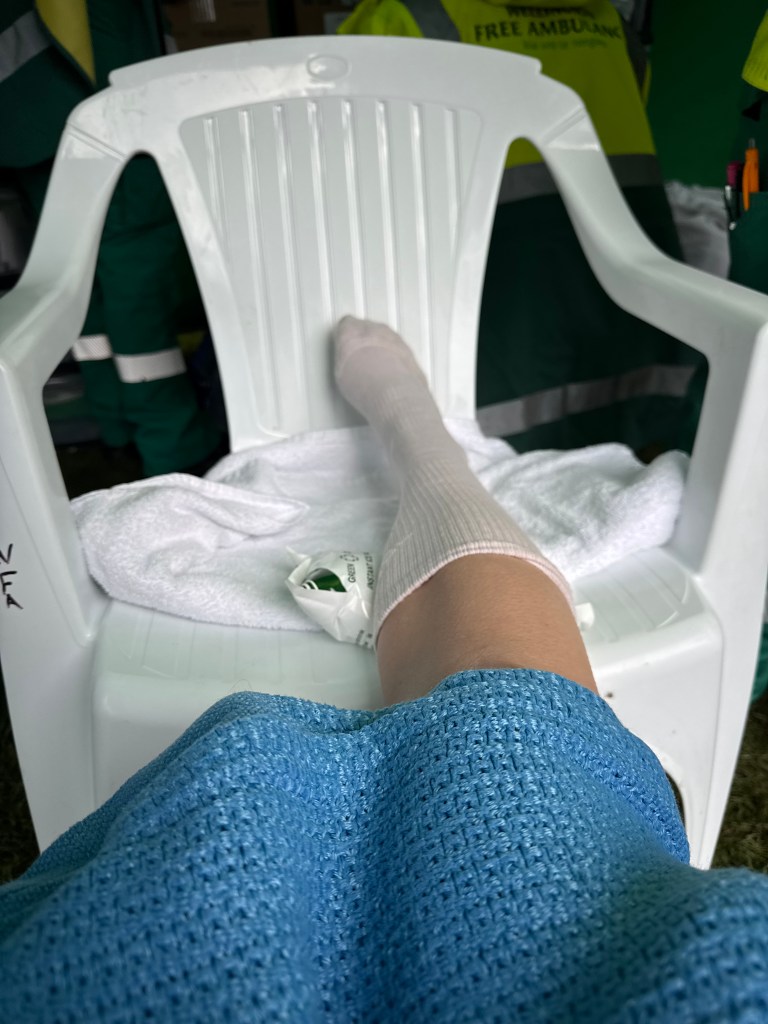
By the time I reached halfway, I physically couldn’t run or even walk. The pain was overwhelming. Every step felt wrong. I stopped at the medic station, already knowing this wasn’t something I could jog off.
What followed felt strangely surreal. Being ambulanced out of a race is not something you imagine when you pin on a bib. It felt excessive. A little embarrassing. I remember thinking this surely couldn’t be necessary.
It was.
The medical team were beyond amazing and the onsite physio confirmed I made the right decision to stop.
The Fall Out
There’s a strange mix of emotions that comes with pulling out. Disappointment. Embarrassment. Frustration. A sense that you’ve failed at something you set your mind to. Especially in a sport where perseverance is so often celebrated, stopping can feel like the opposite of strength.
But the more space I’ve had from it, the clearer things have become.
Getting injured isn’t a moral failure. It isn’t a lack of toughness or discipline. It’s part of running. Part of moving your body in a way that asks something of it. How you respond in those moments matters far more than whether you crossed a finish line on a particular day.
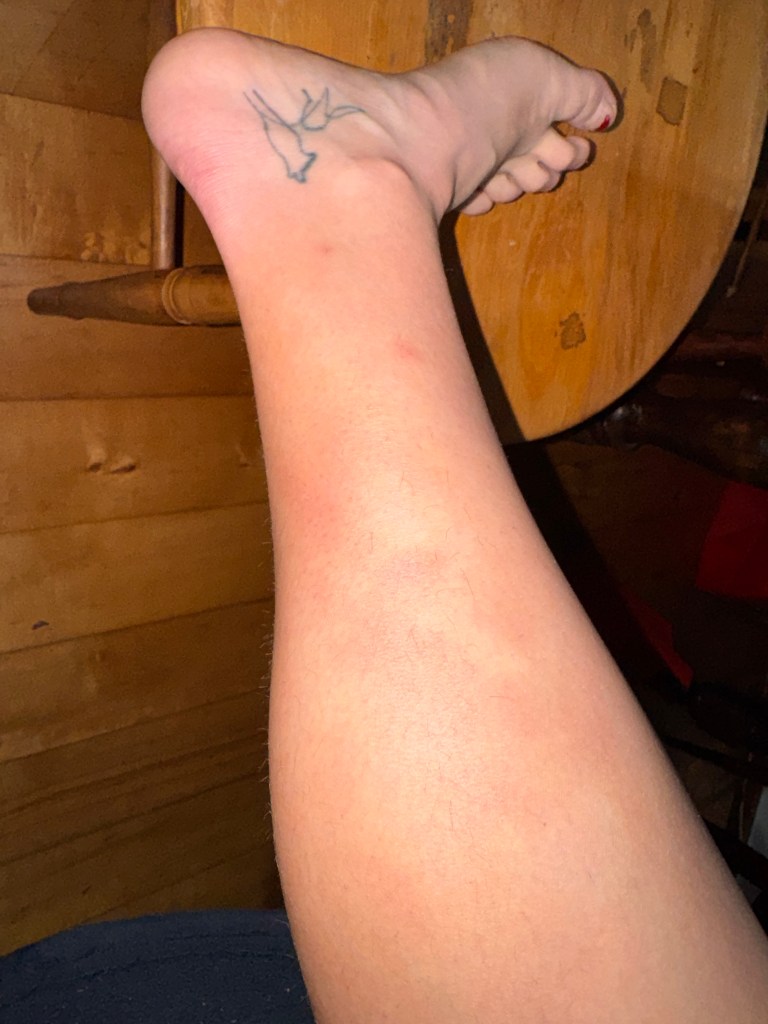
This isn’t a post about rehab plans or physio exercises. I did all the practical things. I was diagnosed with a grade one calf tear, which turned out to be linked to an underactive glute and a dodgy hip. On the upside, I’ve discovered dry needling – 10/10 would recommend.
What followed was a reset.
No running for a week. Over the last month, I’ve had to drop my weekly mileage a lot. Run slower. Stretch more. All things that sound simple, but don’t come easily to me. It requires patience. Restraint. A willingness to prioritise long‑term health over short‑term satisfaction.
What Came Before
In the days after the race, once the swelling settled and the adrenaline wore off, I found myself replaying not just the moment it happened, but everything that led up to it.
The lead up hadn’t been perfect.
I work a busy, sometimes high stress job. The week before the race was particularly intense. Long days, travel, a lot of mental load, not much space to properly switch off. My sleep was inconsistent. I was wearing heels a lot. I went to Lorde’s concert on the Friday night before the race. I was still living my life, not tapering perfectly or prioritising recovery the way an ideal build would suggest.
I’d been training. Consistently. Intentional. But I hadn’t organised my entire life around optimisation.
When I woke up on race day. I had a sense something was off.


At What Cost
There’s a narrative, in running, in work, in life, that perseverance is a moral virtue. That pushing through discomfort is inherently good. That stopping is weakness. That if something goes wrong, it must be because you didn’t want it badly enough or didn’t sacrifice enough.
It’s a seductive mindset. It works for some, sure. But I see it sometimes as rewarding endurance, even when endurance comes at a cost.
I felt that pressure most in the moment I stopped. The voice asking whether I was giving up too soon. Whether I should just grit my teeth and finish, even if it meant weeks or months of recovery afterwards.
But listening to your body isn’t failure.
I didn’t stop because I didn’t care. I stopped because I cared enough to not turn one race into a longer‑term injury. Because pushing through pain doesn’t always make you tough. Sometimes it just makes you hurt.
I’m not chasing perfection. This isn’t my job. There’s no contract, no qualification standard, no real consequence beyond my own expectations. And there will always be another race.
That perspective didn’t land immediately. Disappointment doesn’t disappear just because you can rationalise it. I still felt flat. Like something unfinished had been taken away. I was embarrassed. Annoyed. Beating myself up for failing to finish at all.
But over time, those feelings faded.
This experience was a reminder that I only get one body. That rest isn’t laziness. That stopping isn’t quitting. And that the most sustainable way to keep doing something you love is to listen when your body tells you to.
I didn’t finish the race
There will be other races. Other start lines. Other chances to test myself in better conditions, with a healthier body. This one didn’t end the way I wanted it to, but it didn’t take anything away from why I run in the first place. Sitting with the disappointment and failure has actually been a good thing.
If anything, it reminded me that the goal isn’t to push at all costs. It’s to keep going, over time. To move through this sport, and through life, with a bit more awareness, a bit more restraint, and a lot more grace.
And next time, I’ll be there again. Just a little wiser about when to keep pushing, and when to pull back. Sometimes the best decision is knowing when to stop.
The other lesson learnt is running in 80km/hour southerlies really confirms you can’t beat Wellington on a good day!
 ByFrancesca
Leave a comment